
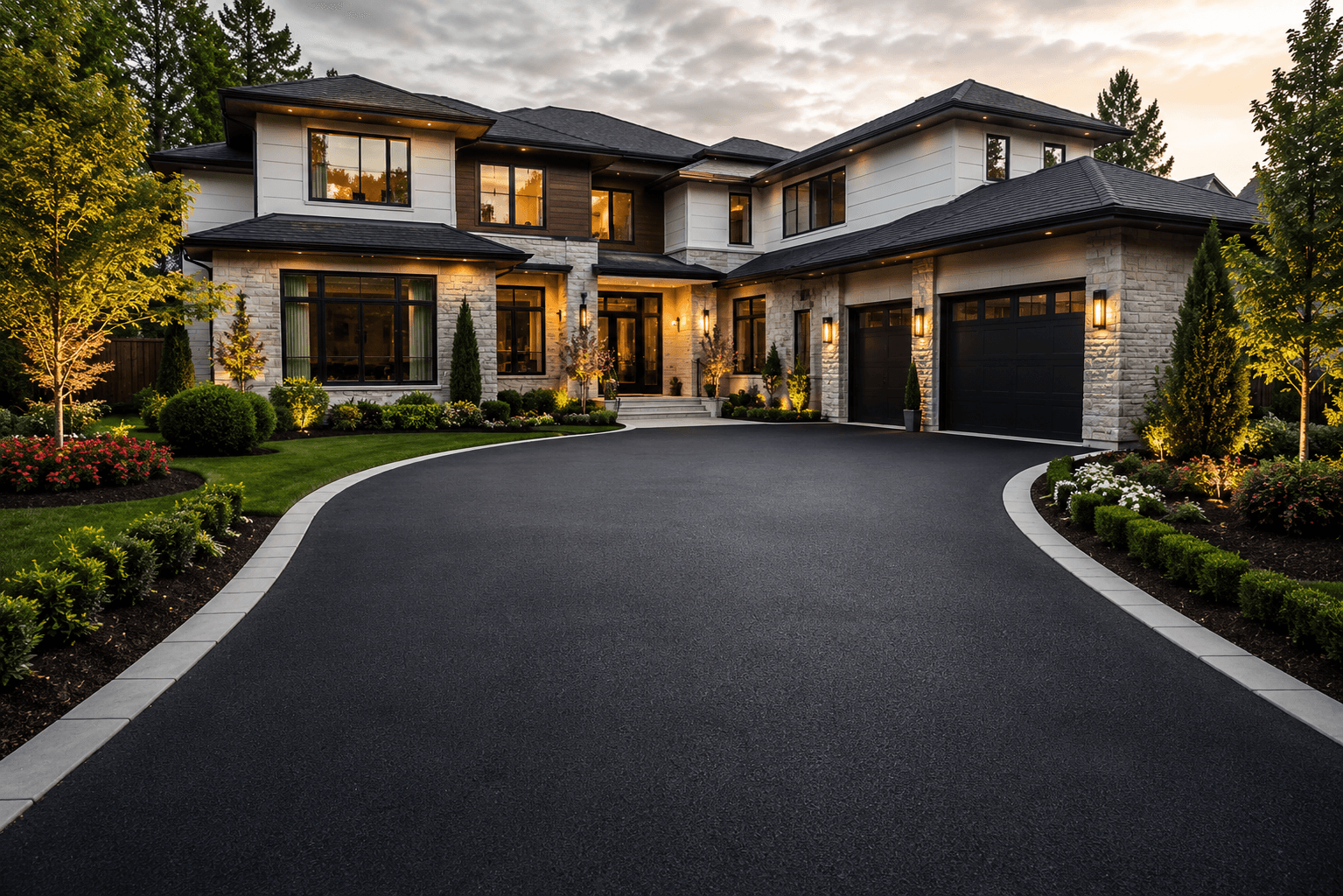
Asphalt Driveway Paving in Charlotte, NC
A smooth, durable driveway that lasts — properly graded, deeply compacted, and finished with clean edges by a local crew. Free written estimates.
A driveway is the first thing people see. Let's make it count.
Whether you're paving a brand-new driveway or tearing out one that's past saving, the difference between a driveway that lasts 20+ years and one that cracks in three comes down to what happens under the asphalt. We grade for proper water runoff, compact a solid stone base, and lay hot-mix asphalt at the right depth and temperature.
Most of our driveway customers are Charlotte-area homeowners who are tired of patching, tired of pooling water, or simply want a clean black surface that lifts their whole home. If that's you, a free estimate is the easy first step.
What a proper asphalt driveway is made of
An asphalt driveway isn't one layer poured over dirt — it's a small pavement system, and nearly every failure we get called out to repair started below the surface, not on it. That matters more here than in a lot of the country: Charlotte sits on Piedmont clay, which compacts poorly and drains slowly compared to sandier soils. Skip the base work to save a day, and you're building a driveway that cracks in three years instead of lasting twenty. Here's what we actually put under your asphalt.
Hot-mix asphalt surface
2–3 in.Laid hot, compacted while still workable, and finished with clean, straight edges where it meets your lawn and garage.
ABC stone base
6–8 in.Crushed aggregate base course, laid in lifts and compacted solid. This layer carries most of the structural load — a thin or loose base is the #1 reason driveways fail early.
Compacted subgrade
Graded & compactedThe native soil is graded to slope water away from your home and mechanically compacted so it won't shift or settle under everything above it.
Source: Base-depth guidance — Illinois Asphalt Pavement Association
Five clear steps, no surprises
Free Estimate
We measure your driveway, assess drainage and access, and give you a clear written quote — usually the same week.
Prep & Grading
We remove the old surface (if there is one) and shape the grade for runoff. Most prep finishes in a few hours to a full day, depending on drainage work needed.
Stone Base
6–8 inches of aggregate base is laid in lifts and mechanically compacted — the step that decides whether this lasts 5 years or 20.
Paving
Hot-mix asphalt arrives at 275–300°F, is laid 2–3 inches thick, and gets rolled immediately — compaction has to finish before it cools below about 185°F or it won't bind properly.
Cure & Walkthrough
Walk on it within hours; drive on it in 24–48 hours (longer in peak summer heat). We walk the finished job with you and cover care and sealcoat timing.
What you get
Signs you need a new driveway, not a repair
Not every damaged driveway needs to be torn out. Here's how to tell which one you actually have.
Alligator cracking
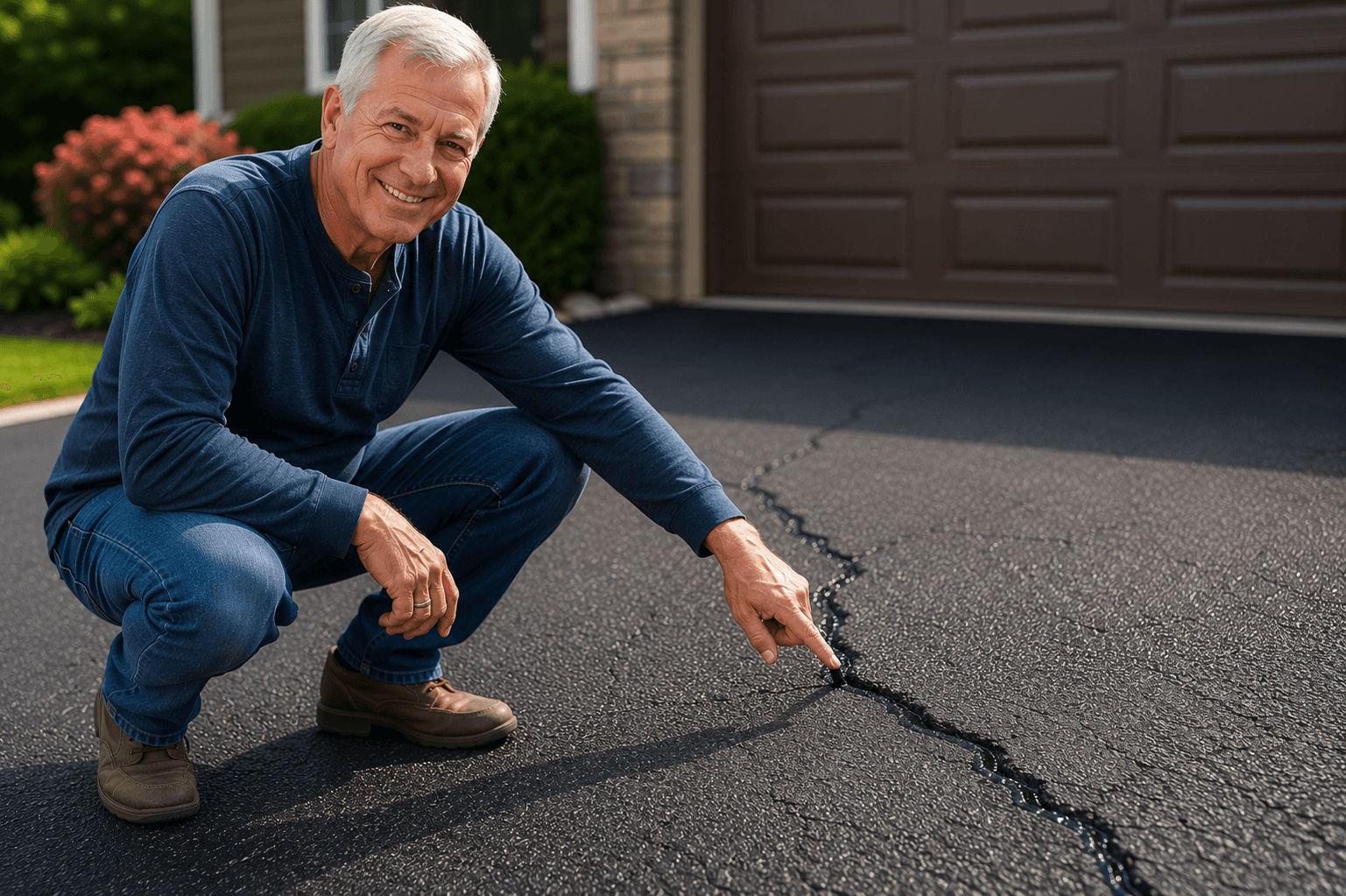
Cracking that spreads in a connected, web-like pattern across large sections means the base underneath has failed. Patching the surface won't fix a broken base.
The same pothole keeps coming back
If a patched pothole reopens, the stone base under it is compromised — a patch there is a temporary fix at best.
Water that never drains
Pooling that doesn't dry out after a day usually means the grade or base was wrong from the start, not just surface wear.
Sinking or heaving sections
Low spots, humps, or areas that visibly shift under a vehicle point to subgrade movement — a repair issue that requires rebuilding the base to actually fix.
More patches than original surface
Once a driveway's been patched repeatedly, you're often paying more over time than a single replacement would have cost.
20+ years old with widespread wear
Even well-maintained asphalt eventually reaches the end of its structural life, where surface-level fixes stop making financial sense.
Only seeing one or two isolated cracks? Repair is probably the smarter, cheaper call.
See asphalt repairWhat a new asphalt driveway costs in Charlotte
Real numbers, not a guess. Price mainly comes down to size — here's what Charlotte-area homeowners typically pay for a full install:
| Driveway size | Approx. area | Typical installed price |
|---|---|---|
| 1-car | ~400 sq ft | $3,200 – $5,000 |
| 2-car | ~600 sq ft | $5,000 – $7,000 |
| Long / custom | 1,000+ sq ft | $9,000 – $15,000+ |
Sample ranges for illustration. Your exact price depends on prep, grading, base depth, and site access — get a free estimate for a number specific to your property.
How long a Charlotte asphalt driveway actually lasts
A properly installed asphalt driveway — right base depth, right grade, right compaction — typically lasts 15 to 20+ years. Asphalt is a flexible pavement by design, so it moves slightly with ground temperature changes instead of cracking outright the way rigid materials can. That flexibility is also why maintenance matters: a few minutes of upkeep every couple of years adds real years to the surface.
First 6–12 months
Let the asphalt finish curing and hardening, then schedule your first sealcoat.
Every 2–3 years after
Reseal to protect against sun, oil, and water — the single biggest lifespan lever you control.
As needed
Fill new cracks early, before water gets underneath and reaches the base.
Want the surface to go the distance? See our sealcoating service
Source: Why asphalt performs — NAPA
From cracked to like-new
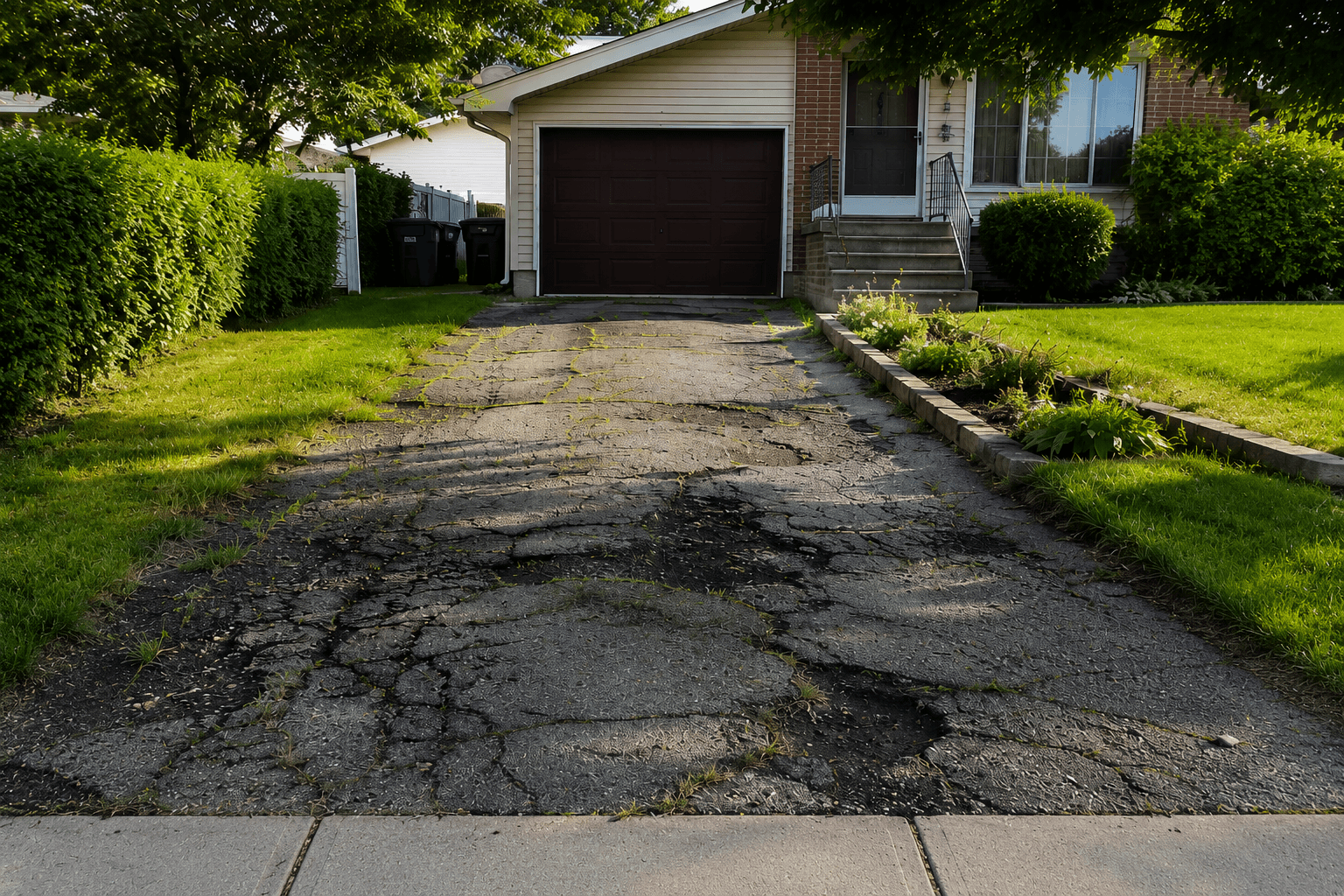 BEFORE
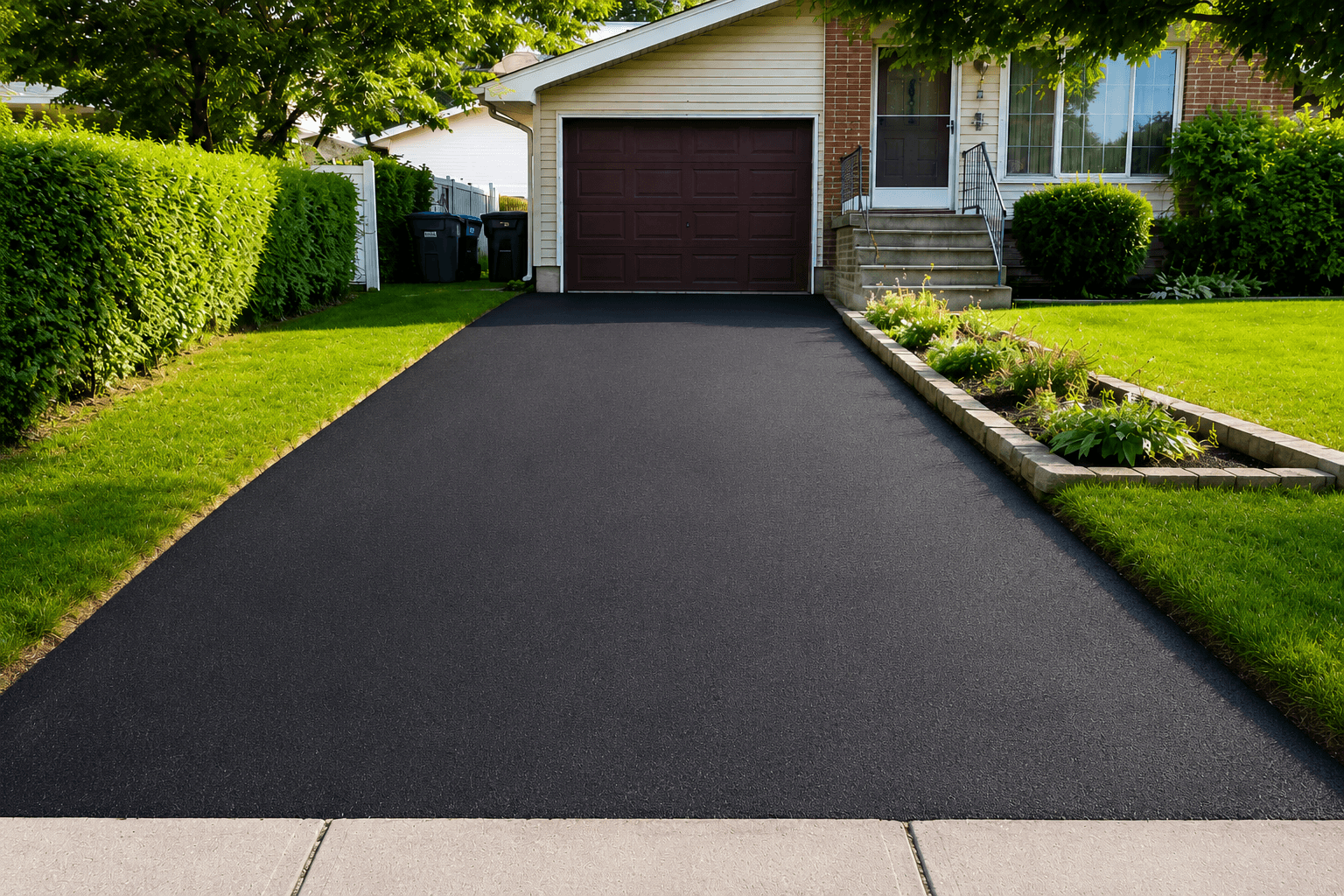 AFTER
AFTERFull tear-out & repave · Myers Park
This driveway's old base had failed and the surface was heavily alligator-cracked. We tore it out, rebuilt a 6–8 in. compacted stone base with proper drainage grading, and paved a fresh 2–3 in. surface course.
Homeowners who trusted us with their driveway
"They tore out our 20-year-old driveway and the new one is flawless. Water actually drains now. Worth every penny."
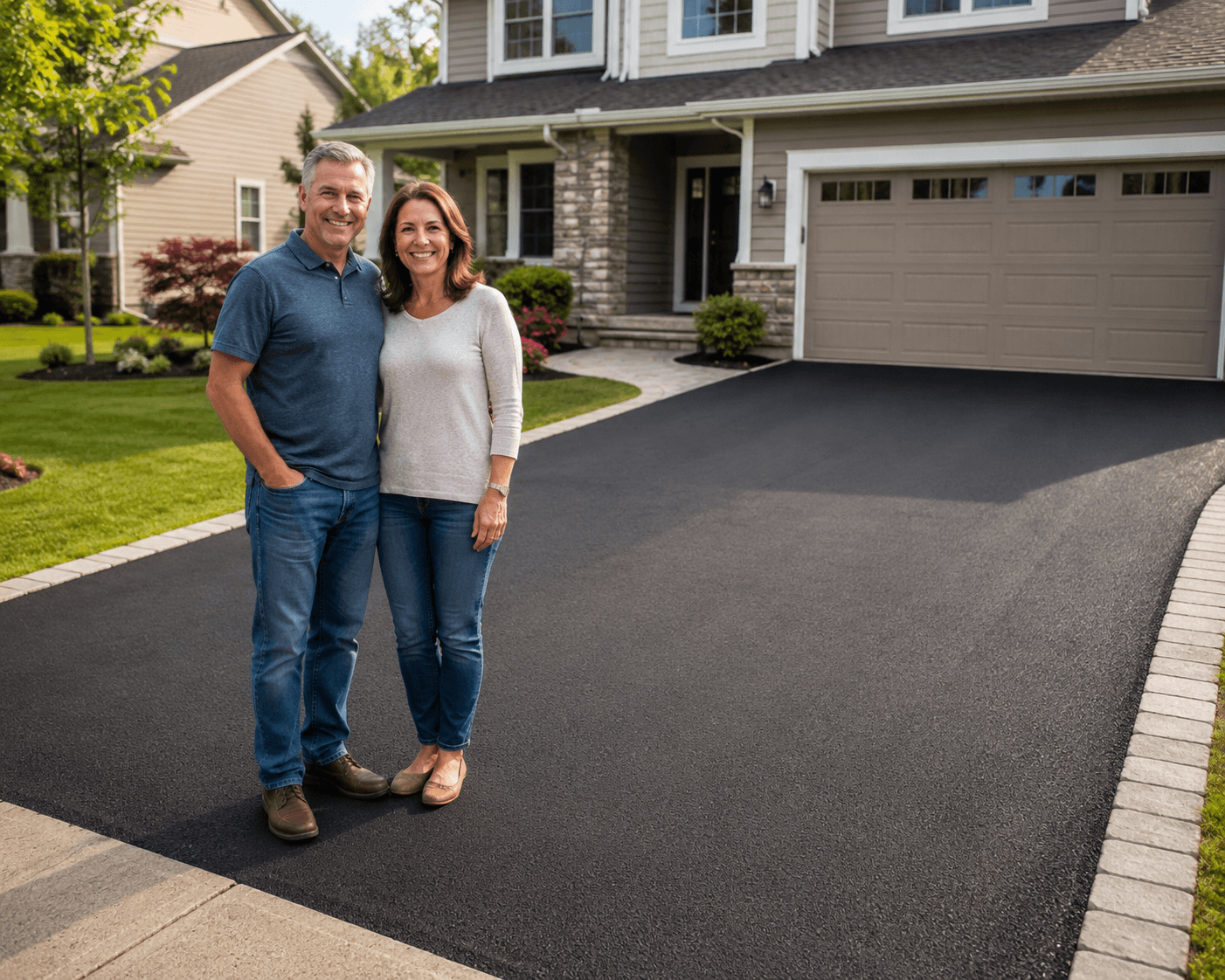
"Crew was in and out in a day and the edges are razor clean. Our whole street has been asking who did it."

"Fair quote, no upsell, everything explained. The new driveway looks better than when the house was built."
Driveway Paving across the Charlotte metro
Tap your town for local details, or just request a quote.
Driveway Paving FAQs

Ready for a driveway you're proud of?
Get your free, no-obligation estimate today. Most Charlotte-area quotes are scheduled within a few days.